
Blog
Chemical resistance of polyethylene foam

1. The secret to sustainability: molecular structure
To understand the strength of this foam, we need to look at the molecular level. Polyethylene is a nonpolar, saturated polymer with the chemical formula.
Neutrality: Due to the lack of active functional groups in the polymer chain, this material has very little tendency to react with other chemicals.
Strong bonds: The carbon-hydrogen bonds in this structure are very stable and require a lot of energy to break them.
Technical note: "Crosslinked" polyethylene foams have higher chemical and thermal resistance than the regular type due to the cross-linking between polymer chains.
2. Performance against humidity and water
One of the most prominent features of polyethylene foam is its closed-cell structure. Unlike spongy (open-cell) foams, the air bubbles within polyethylene foam are completely enclosed.
Low water absorption: The water absorption rate of these foams is close to zero. This feature allows them to maintain their insulating properties even in humid environments or in direct contact with water.
Biological resistance: Since moisture does not penetrate the foam, it does not provide a breeding ground for bacteria, mold, and fungi. This feature is vital in the food and medical industries.
3. Behavior against acids and bases
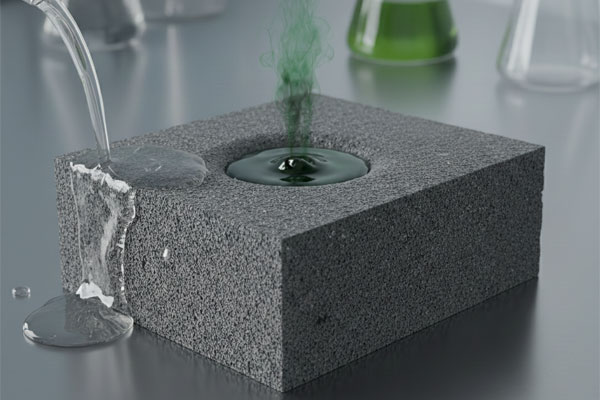
Polyethylene foam is resistant to a wide range of acids and alkalis.
Acids: This foam shows good resistance to dilute mineral acids and even some concentrated acids (such as hydrochloric acid or sulfuric acid at low temperatures) and does not corrode.
Bases: Alkaline solutions such as caustic soda (sodium hydroxide) do not have a destructive effect on the structure of polyethylene.
This property makes polyethylene foam an excellent choice for gaskets and seals in chemical tanks.
4. Achilles' heel: solvents and hydrocarbons
Despite its excellent resistance, polyethylene foam is not indestructible against all materials.
Organic solvents: Prolonged contact with certain hydrocarbon solvents (such as gasoline, kerosene, or toluene), especially at high temperatures, may cause foam to swell or soften. Although the foam does not dissolve in this state, it may temporarily or permanently lose its dimensions and mechanical properties.
Strong oxidizing agents: Contact with very strong oxidizing agents (such as concentrated nitric acid) can cause polymer chain degradation and foam embrittlement.

 Persian
  English